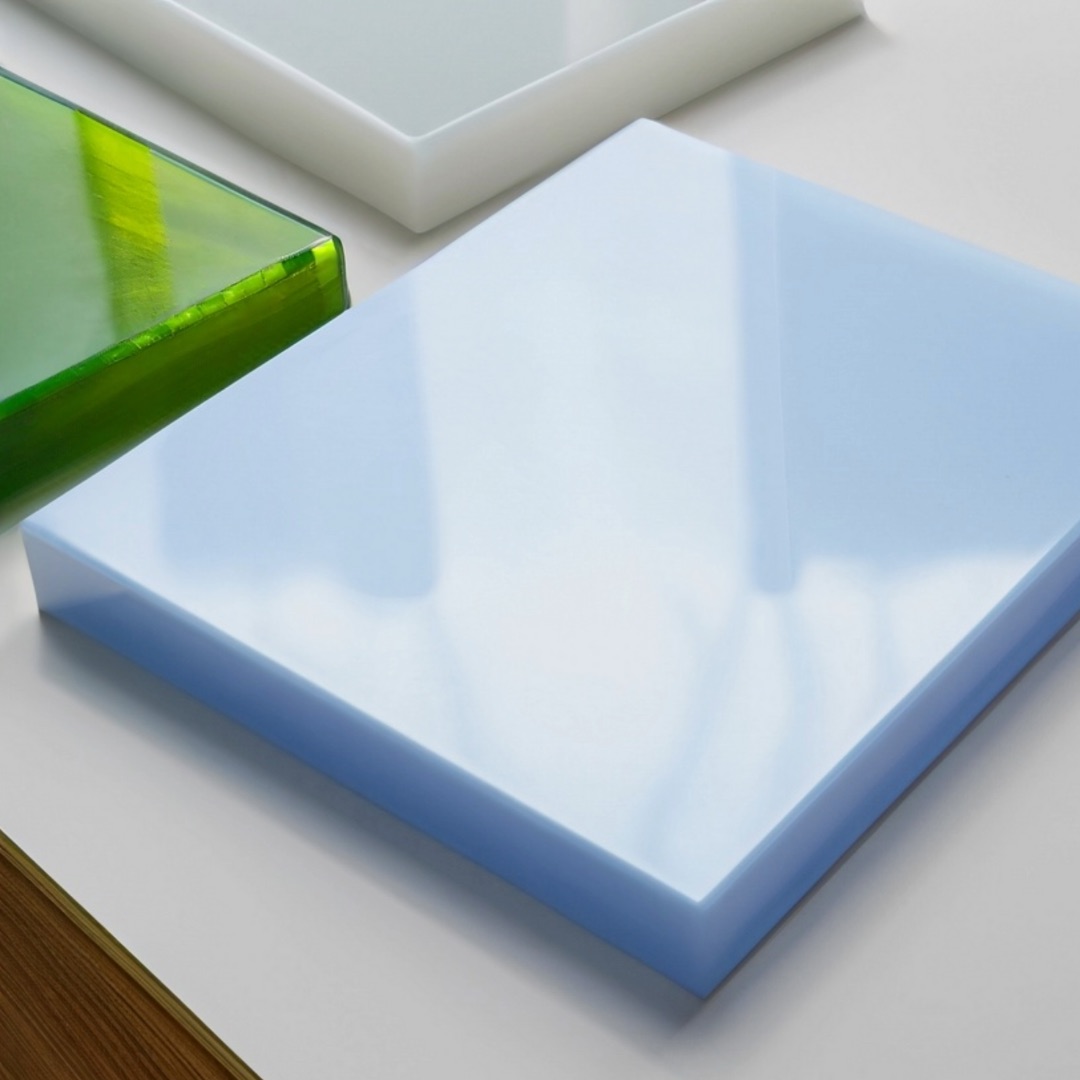
General information about acrylic – Laser cutting of acrylic
Acrylic melts easily under the heat generated by laser cutting. A general rule of thumb is to maintain a distance between workpieces equal to the thickness of the material. This means that if you are cutting a 10mm-thick sheet, you should maintain a 10mm distance between the workpieces. However, when working with acrylic, we recommend maintaining a minimum distance of 5mm, even for sheets less than 5mm thick, as the material can melt quite easily. If the workpieces are placed too close together, you simply run the risk of the holes fusing together.
As a general rule for laser cutting, the thicker the sheet to be cut, the more power the machine requires, and the greater the risk that the acrylic will melt. At cotter.dk, we can laser-cut sheets up to 30 mm thick before they melt away completely or catch fire.
Line or surface engraving
With line or flat engraving in acrylic, however, there are more options when it comes to fine details. When the laser engraves, it does not use quite as much power. It is therefore possible to create fine details using laser cutting – even in acrylic.
When acrylic is engraved, it takes on a milky-white surface. This also applies to coloured acrylics. With deep engraving, deposits will form around the engraved area. This can be removed with a damp cloth, although it cannot be removed from within the engraved area itself. With line engraving, a thin line of approximately 0.2 mm is etched.
Good to know
Acrylic is often used for façade and shop signs, as it is durable and can withstand outdoor conditions. It is also used for architectural models, jewellery, prototypes and everyday items such as boxes, etc.
Our acrylic sheets generally come with a protective film on both sides, which helps to prevent burn marks. When only laser cutting is required, we leave the film in place. If surface engraving is required, the film is removed from the side to be engraved.
Cotter.dk offers a wide selection of different thicknesses and colours. All acrylic sheets are available in A4, A2 and A1 sizes; some types are available in 2000×1000 mm. You can view all our materials, dimensions and colours in our materials range here.
Laser cutting
Top – No burn marks. A protective film is applied as standard, which must be removed once you have received your cut piece. The finish is clean and sharp. For flat engraving, the film is removed before cutting. Close to the cut edge, there will be a matt residue from the smoke produced during cutting.
Edges – No burn marks. Appear sharp and in the same colour as the material itself. Please note! However, the inside of sharp corners and curves will take on a dark colour from the laser.
Base – No burn marks. Appears clean and sharp. As a rule, a protective film is applied, which must be removed once you have received your cut piece.
Finishing
Acrylic can be bent when heated, for example to form hinges. The best results are achieved by using a template to guide the bending (which can be made from MDF, for example) and a hairdryer or other means of heating the material first.
You can write on acrylic using whiteboard markers and permanent markers.
Acrylic can be cleaned with soap and water.
Contact adhesive or epoxy can be used if, for example, the material needs to be joined to the same or a different material.